
PPC & Paid Social for a London Aesthetic Clinic
Ouronyx
Treatments £600–£4,000+ · HNW Audience · £100K Monthly Budget
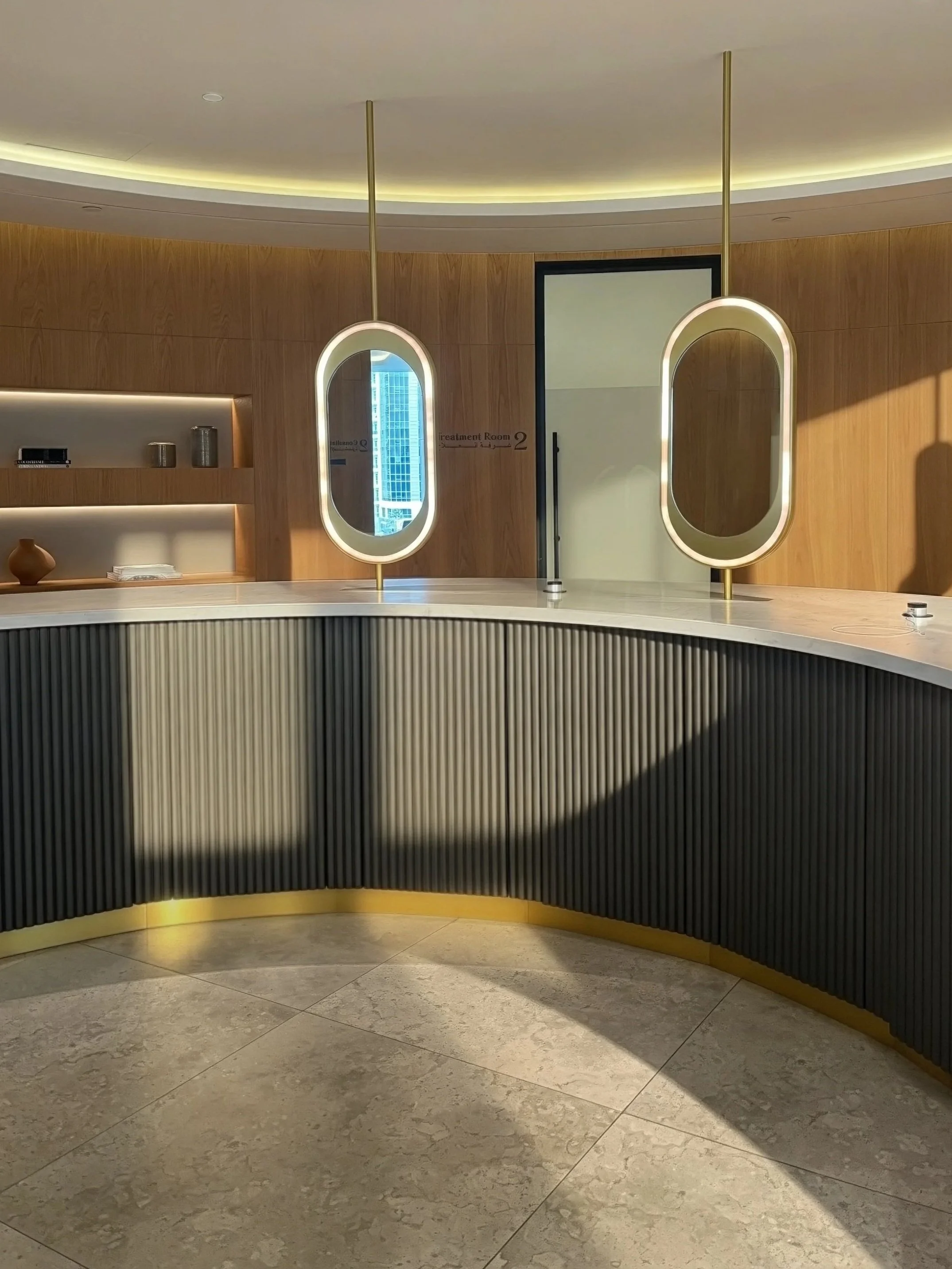
Luxury holistic aesthetics clinic with flagship locations in London and Dubai, specialising in advanced non-surgical treatments for a discerning global clientele. Renowned for exclusive positioning, Ouronyx serves individuals seeking a holistic approach to medical-grade aesthetic results.
The Objective
Goal: Increase clinic bookings by 40% in three months while protecting the exclusive positioning of the brand and growing average client value.
Platforms: Facebook & Instagram Ads, Google PPC, and LinkedIn Ads.
Budget: £100,000 per month. £50,000 per location (London & Dubai), dynamically optimised across channels based on performance and market opportunity.
The Challenge
Ouronyx operates in one of the most constrained paid media environments: healthcare advertising restrictions meant no pricing, no before/after imagery, and no standard CTAs. Inherited campaigns were stuck in Meta's learning phase — audiences too narrow, CPAs climbing, and AOV plateaued despite consistent traffic across both markets. With two locations running separate budget allocations, the account needed a unified strategic rethink without relying on the usual performance levers.
To meet ambitious growth targets, Ouronyx required a results-driven paid advertising strategy that would:
✔ Reduce CPA while increasing AOV
✔ Capture high-intent searches via Google Ads in a restricted healthcare category.
✔ Scale visibility and bookings across Meta without discounting or offer-led creative.
✔ Engage senior executives and HNW professionals in London and Dubai via LinkedIn.
The Strategy
Creative Direction
Creative direction was rebuilt from deep audience insight: conversations with clinic doctors, Reddit research, and competitor analysis all revealed the same core fear - women didn't want to look like they'd "had work done." That single insight became the foundation of all messaging. "Restore and define facial features." "See an immediate lifting effect." Precision and trust, not promotion. No discounting, no offers, no noise.
Meta — Full-Funnel Structure
Top of funnel: awareness via Reels and UGC content — doctor-led, clinical, confidence-led storytelling to build brand trust with cold HNW audiences.
Mid funnel: treatment-specific conversion creative targeted at warm audiences who had engaged or visited the site.
Bottom of funnel: social proof creative and retargeting — re-engaged Instagram engagers, website visitors, and unconverted enquiries with dynamic creative across Stories, Reels and carousel formats.
Email automation built to close high-intent signals at lower CPM, reducing pressure on paid channels at the bottom of funnel.
Rebuilt audience strategy within Meta's Andromeda framework — broader top-of-funnel signals, letting high-intent creative do the qualification work rather than over-restricting at audience level. Separate campaign structures maintained per market (London and Dubai) to reflect different audience dynamics and price sensitivity, with lookalike audiences built from CRM data for each location.
Google Ads — Intent Capture
Brand and non-brand campaigns structured with persona-based ad groups: results, trust, price sensitivity, and convenience — each with tailored messaging.
Aggressive negative keyword strategy to block unqualified traffic from day one (e.g. "free," "NHS," "cheap").
High-intent aesthetic treatment keywords crafted for Google Search, achieving 7% CTR and £0.65 CPC.
Google drove 32% of total conversions, complementing Meta's awareness and retargeting work.
Attribution
UTM to CRM Bridge was critical as healthcare data restrictions meant platform attribution could not be relied upon.
UTM-to-CRM bridge was built connecting campaign data directly to Cliniko (the clinic's booking system), enabling optimisation toward actual client revenue and AOV — not just form fills or platform-reported conversions. Budget was dynamically shifted toward campaigns driving real paying clients, not just enquiry volume.
LinkedIn Ads — HNW Professional Audience
LinkedIn campaigns targeted senior executives, entrepreneurs, and C-suite professionals in London and Dubai. Achieved CTR of 0.9–1.2%, driving early brand awareness with high-value prospects not typically reachable via Meta or Google alone.
LinkedIn Ads
LinkedIn campaigns targeted senior executives, entrepreneurs, and C-suite professionals in London and Dubai. Achieved CTR of 0.9–1.2%, driving early brand awareness with high-value prospects not typically reachable via Meta or Google alone.
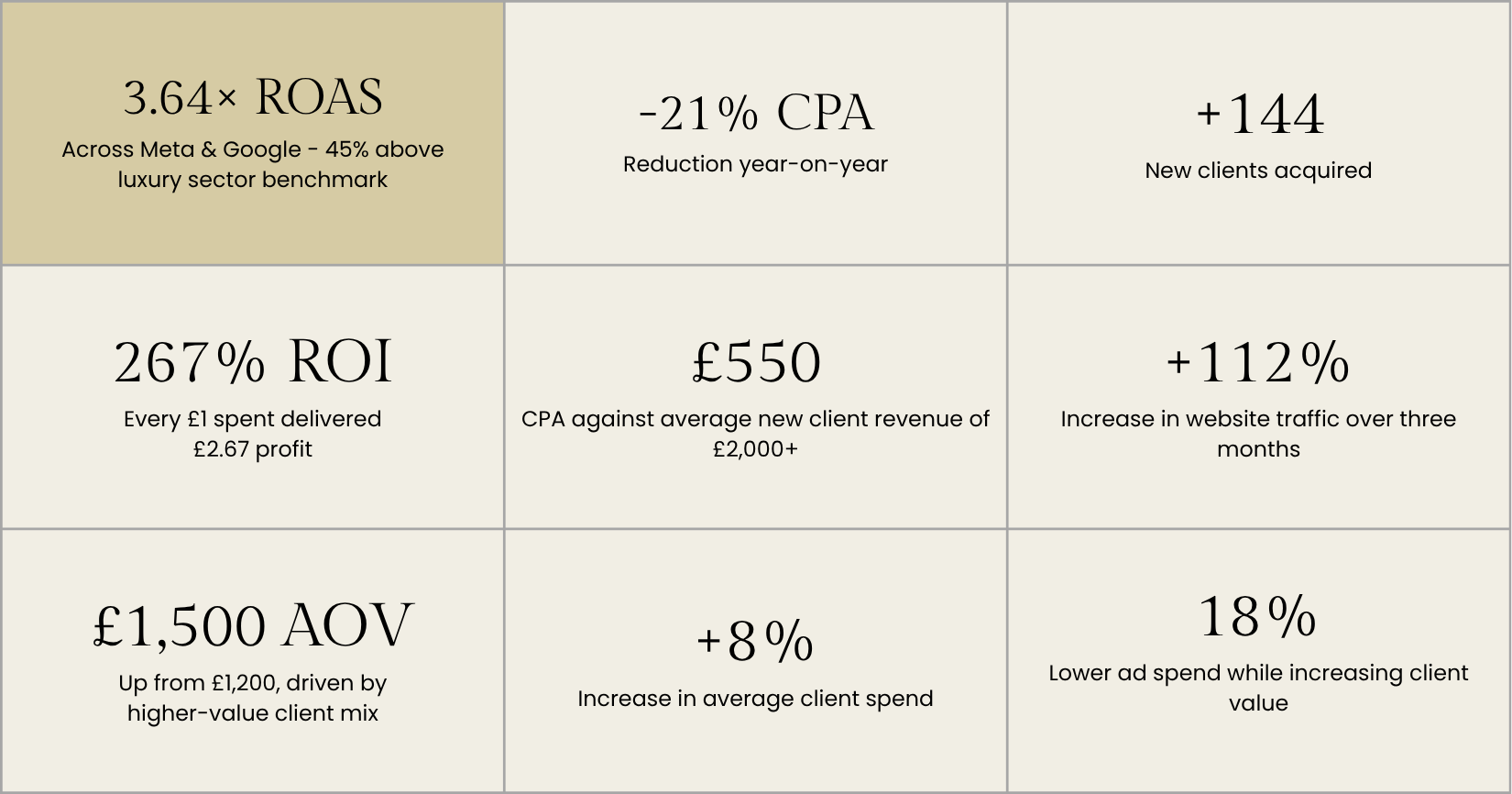
Results
Key Learnings
Channel Synergy: Google captured high-intent demand while Meta scaled awareness and retargeting. Neither channel worked in isolation - the combination drove efficiency across the full funnel.
Creative Testing: In a restricted healthcare environment with no standard levers available, creative precision became the primary targeting mechanism. The right message qualified the audience before the click.
Audience Refinement: Lookalike audiences from CRM data, combined with income and interest layering, unlocked higher-value client segments. LinkedIn reached senior professional audiences not accessible via other channels.
Platform ROAS: Platform ROAS alone was misleading. Building a direct CRM attribution bridge revealed which campaigns drove real revenue - and which were generating enquiry volume with no commercial value.
-
Platform-reported ROAS can overcount as Meta attributes on a 7-day click window and takes credit for conversions that would have happened anyway. In a healthcare environment it's worse, because data restrictions mean fewer signals flow back to the platform in the first place.
The fix is to build your own attribution layer. Connect UTM parameters directly to your CRM so every booking, consultation, or purchase can be traced back to the campaign and creative that drove it. Use platform data as a directional signal for in-platform optimisation decisions, GA4 for a cross-channel view, and CRM revenue as the actual source of truth for budget decisions.
At Ouronyx, I built a UTM-to-CRM bridge into Cliniko. It revealed campaigns that looked efficient on Meta but were generating low-value enquiries, and others that looked average on paper but were driving the highest-AOV clients. Budget decisions moved from reported ROAS to real revenue which is how the account got to 3.64× verified against actual clinic income.
-
The learning phase requires roughly 50 optimisation events per ad set per week. If your account is fragmented across too many narrow ad sets, none of them accumulate enough signal to exit. The fix isn't to wait longer or lower the bid; it's to consolidate.
Reduce the number of active ad sets and broaden audiences so data density concentrates rather than spreads. Under Meta's Andromeda framework, the delivery system responds to creative signal quality so the qualification work that used to happen at audience level now happens through creative. A tighter, more specific message reaches the right person without manual audience restriction.
At Ouronyx, inherited campaigns were stuck in this exact pattern - too narrow, high CPMs, stagnant performance. Consolidating the structure and letting creative carry the targeting shifted the account out of learning, stabilised CPAs, and gave the algorithm enough signal to optimise properly.
-
Most paid media creative relies on a hook that's either promotional (offer, price, urgency) or comparative (before/after, results). In regulated healthcare, both are largely off the table. That forces a more rigorous process, which actually produces better creative.
Start with audience insight rather than creative production. Talk to the people closest to the customer in a clinic context that's the doctors and consultants and layer that with Reddit research, review mining, and competitor ad library analysis. The goal is to find the real fear or desire underneath the surface-level want.
At Ouronyx, every research source pointed to the same insight: women didn't want to look like they'd had work done. They wanted reassurance it would look natural. That became the entire creative direction - precision, trust, clinical confidence. "Restore and define facial features." No promotions, no noise. I filmed the first round myself in the clinic to prove the direction before spending on production. That creative ran for over 12 months and became the highest impression volume asset in the account - which is the most honest measure of whether a creative direction works.
*This project was completed during a period of full-time employment from April 2024 - June 2025. All strategy, campaign management, optimisation and reporting was carried out independently.